

How to Switch from Windows to Mac (Complete Guide)
So you decided to switch from your Windows PC, to a Mac; and now you lot're wondering what you should expect, and what you lot should know in order to fully capeesh your make new, shiny piece of hardware? Well, that's the kickoff thing – to appreciate a Mac for what information technology is, you lot need to realise that it's not simply hardware; a Mac is a software and hardware parcel, nay, experience, that you will fall in honey with. As adept as you may be with using Windows, there are a host of things virtually the Mac (both big, and small; good, and bad) that you lot should be enlightened of. That is exactly what I'm here for. Permit me walk you through the entire process of using a Mac.
Notation :I'grand writing this article from the point-of-view of what a complete newbie to the macOS environment should know. People who have used a Mac before would probably know these things already.
Desktop
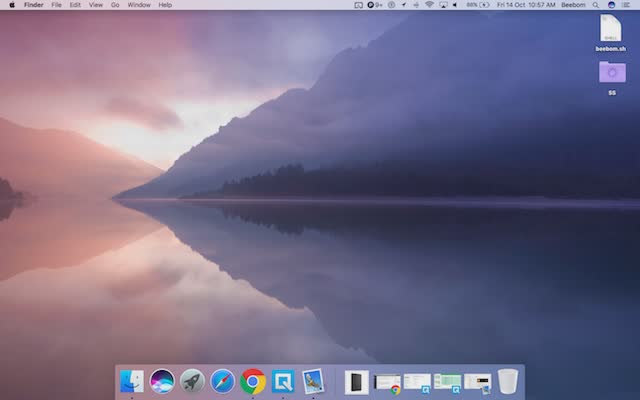
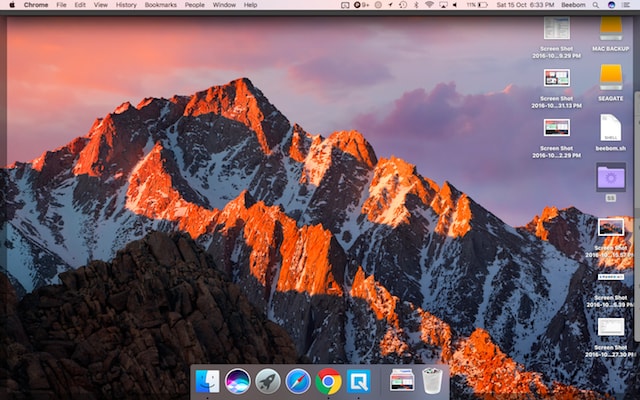
The get-go matter yous'll notice when yous start up your Mac, is how unlike the interface looks. Well, actually the starting time thing you'll probably detect, is that information technology boots up virtually instantly, but we'll ignore that. You'll be greeted with your desktop, in one case you've logged in, and you won't find whatsoever "This PC" sort of icons there. That's because a Mac isnot a PC.
The cardinal manner in which you'll use a Mac is very different from how y'all might take been using a Windows PC. The desktop on a Mac is usually clean, and there is absolutely no "This PC", "Command Panel" icons on there. Oh, and also, there is no selection to "Refresh". Distressing.
Finder
Before y'all start wondering where the "Explorer" has gone off to, allow me tell you lot that a Mac uses what Apple tree calls a "Finder", and information technology is alwaysopen… waiting to assist you manage your files. On the "Dock" (that's the thing on the lesser of the screen), yous'll notice a few (a lot of) standard things that you might want to get started with. All open up apps have a pocket-size black dot below their icon in the dock, just to help you identify the apps that are currently open. You can run into the dots in the screenshot, under the icons for Finder, Chrome, and Quip.

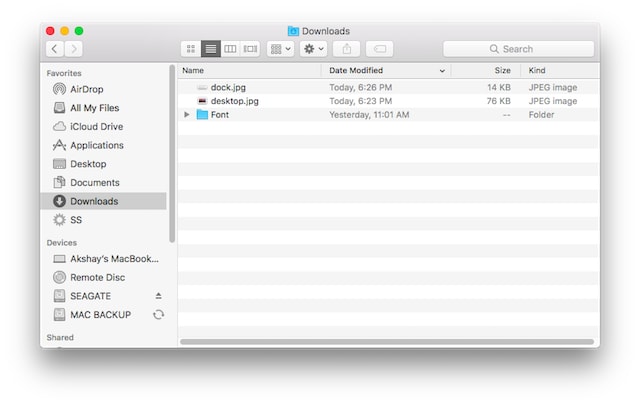
The first on this list is the Finder. Click on it, and yous'll see a "Finder Window" open upwardly for y'all. This is the Mac equivalent of the "Windows Explorer", and this is where you'll manage your files, create folders, smart folders, add tags, and basically do everything related to file management.
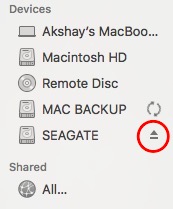
If y'all take connected a USB bulldoze, or an external difficult disk to your Mac, they volition announced on the Finder side-bar equally well, forth with an eject icon next to their names. You lot can click on this icon to safely remove the drive from your Mac, earlier disconnecting information technology.
Closing the Finder window is easy, as well – just click on the red button on the top left corner. Y'all'll see that it reveals an "X" marking as soon every bit your cursor hovers over it. You can besides use the shortcut "command + W" to shut the window.
Note : You can actually use "command + W" in any app, actually, and it is extremely handy while endmost tabs in a browser, or in the Finder. That's right, the Finder supports tabbed browsing. Believe me, you'll dearest it.
Some useful Finder Shortcuts:
- Create new binder: command + shift + N
- Open up new Finder Window: control + N
- Open new Finder Tab: command + T
- Rename File/Binder: Press Enter
- Open File/Binder: control + O
- Get Information (Properties) about a File or Binder: command + I
While you're yet in the Finder, you should probably get acquainted with the manner your files are managed past macOS. Macs don't organise files the way Windows does, and yous will not run into whatever drive partitions like "C, D, E, etc". Instead, macOS treats your entire drive as one drive, and creates a single tree of destinations on it. If you've ever used a Linux automobile, you lot'll be right at home with the macOS way of treatment files. If you oasis't, don't worry, it'southward non too hard to effigy out.
To teach by analogy, it'southward as if in that location was only a C: drive on your PC, and all your files were stored in there. The near common places you demand to know about, are all available in your Finder sidebar. Pay listen to Applications, this is where all of your applications are.
Keyboard Shortcuts
Copying and pasting files on a Mac works only as it does on Windows… almost. While you do have a "control" key on the Mac keyboard, the shortcuts to copy and paste files, folders on a Mac is by using "command + C", and "command + V", respectively. Now that you're about to re-create your files into the work folder that y'all created, peradventure you realised you actually want tomotilitythem there. But there is no option to cuttingfiles in the Finder. We're in a pickle here… or are we? You tin can simply copy the files (command + C), and instead of pasting them, you but printing "command + option + 5". That shortcut basically movesyour files to the new destination. Then, yeah, Macs practise kinda have an option to "cutting and paste" files, even though they don't really telephone call it that. Heh.
Deleting files on a Mac is also a footling different from that on Windows. While in Windows, y'all could just select a file, and press "delete", or "shift + delete" to motion it to the recycle bin, or permanently delete it; on a Mac, you have to utilize "command + delete" to motility a file to the trash, and "control + option + delete" to permanently delete it.
While we're talking about using the delete button, you should too be enlightened that the delete push on a Mac is not the same as the delete push on a Windows keyboard. On a Mac, the delete button is treated as backspace, and if you lot want to use it equally a forwards delete, you'll take to use "fn + delete"
| Action | Windows Shortcut | Mac Shortcut |
|---|---|---|
| Copy | Ctrl + C | control + C |
| Paste | Ctrl + V | control + V |
| Cut | Ctrl + X | NA |
| Select All | Ctrl + A | command + A |
| Switch Applications | Ctrl + Tab | command + tab |
| Quit Program | Alt + F4 | command + Q |
| Open a File/Binder | Enter | command + O |
| Rename File/Folder | F2 | Enter |
| Find in Document | Ctrl + F | command + F |
| New | Ctrl + N | control + N |
| Format Bold/Italic/Underline | Ctrl + B / Ctrl + I / Ctrl + U | control + B / control + I / command + U |
Trackpad Basics
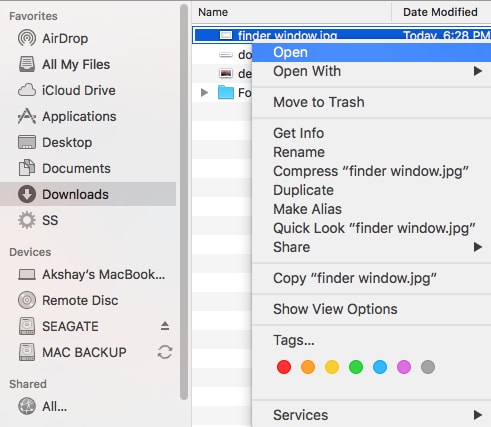
If y'all're like me, you prefer using the keyboard. But, youonlybought a brand new Mac, and you lot've heard so much near the trackpad, it'south obvious you desire to give information technology a go. It looks really clean, and uncomplicated, nevertheless hides a spectacular amount of complication. The starting time thing that might derange yous, is that there are no buttons, or even demarkations for the "left, and right click". The thing is, you can click anywhere on your trackpad and it'll be registered as a click (a left click, to be precise). So how in the world would someone perform a right click. Well, it's a matter of using more than just the one finger. You can tap on your trackpad with ii fingers, and viola! You accept a right click. Go try information technology out on the files you copied. Select them (hover the cursor over them, and tap anywhere on your trackpad), so perform a 2 finger tap on the trackpad. Yous'll come across a context bill of fare with a lot of options, including sharing, renaming, copying, etc.
Some trackpad gestures available on Mac:
- Launch Mission Control: Perform a three finger swipe up.
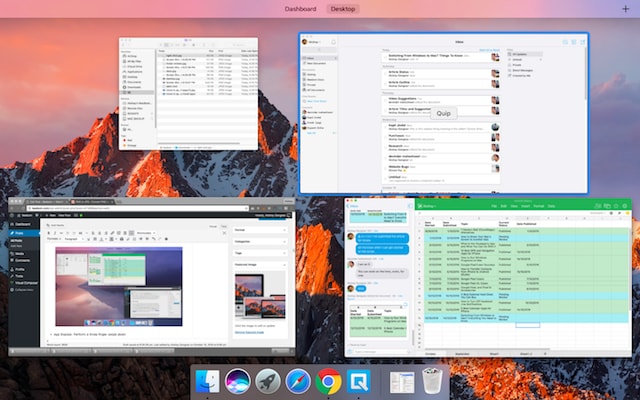
- App Expose: Perform a iii finger swipe down.
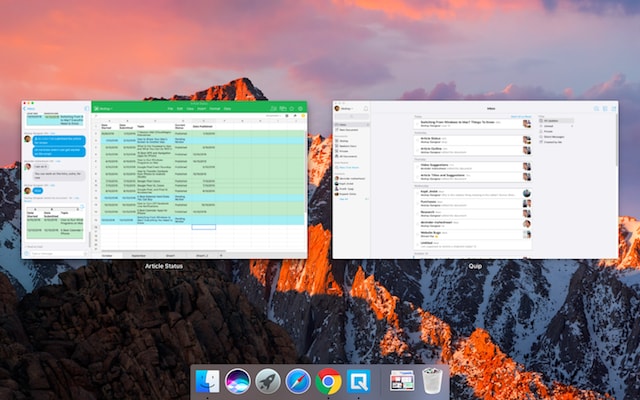
- Show Desktop: Perform a 4 finger compression out.
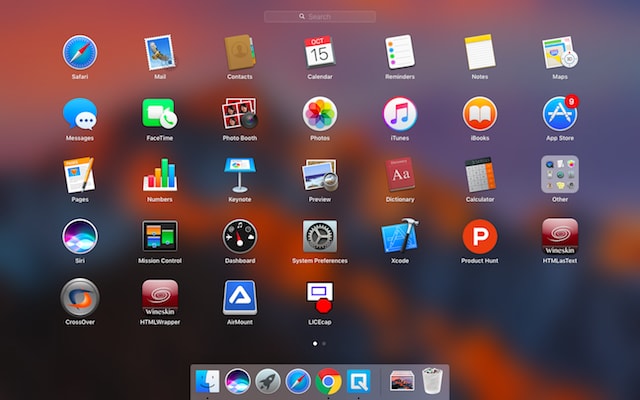
- Launchpad: Perform a 4 finger pinch in.
Launching Applications
Launchpad
At present that you lot've started working on your Mac, yous probably want to know what applications your Mac comes with, out of the box, but there is no start menu! The selection of apps on the Dock is a pocket-size subset of what yous really go access to. And so, how do you access all of your apps? Well, quite simply, you do information technology using either a gesture on your trackpad (Yes!), past opening the Launchpad from the dock (that second icon, with the rocket), or by pressing the "F4" key. Let's try that gesture, shall nosotros? It's really simple. Simply pinch in on the trackpad with four fingers, and you lot'll see the Launchpad animate onto your screen. You can compression out with iv fingers to get out of at that place. Seriously, get out of at that place, once you lot've taken a good look at the kinds of apps bachelor to you.
Spotlight
If I'm beingness honest, no ane really uses the Launchpad to launch apps. People prefer the Spotlight. Try pressing "control + space", or clicking on that "lens" icon on the top correct of the bill of fare bar.

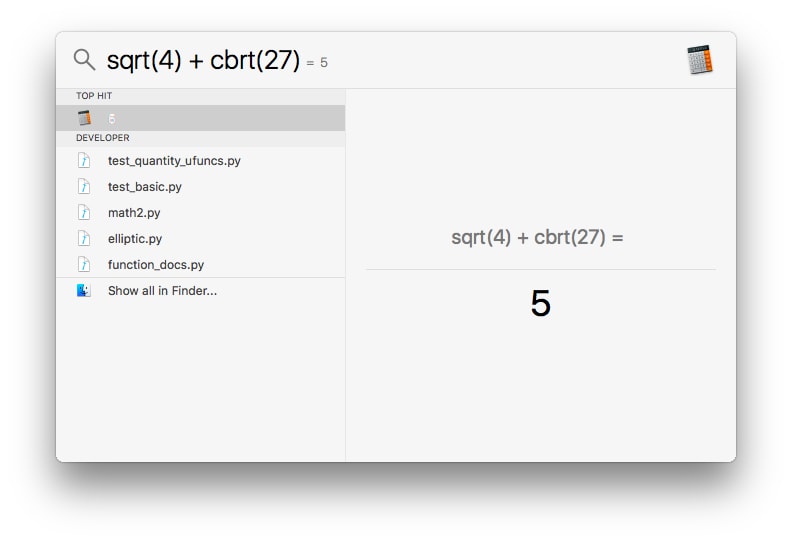
That'south the spotlight search. Yous can use it to launch apps, perform calculations and conversions, get information from the web, and even await upwardly meanings of words from the Lexicon. Oh, yous can likewise use it to search for your files. Since, we were talking about getting some work washed, how almost typing in "Pages", in the Spotlight. Pages is the iWork version of MS Discussion, by the way. Run into how Spotlight tries to approximate what you might be looking for? Information technology gets to Pages as soon equally you type "Pa". At this betoken, you lot can simply hit Enter to launch the app.
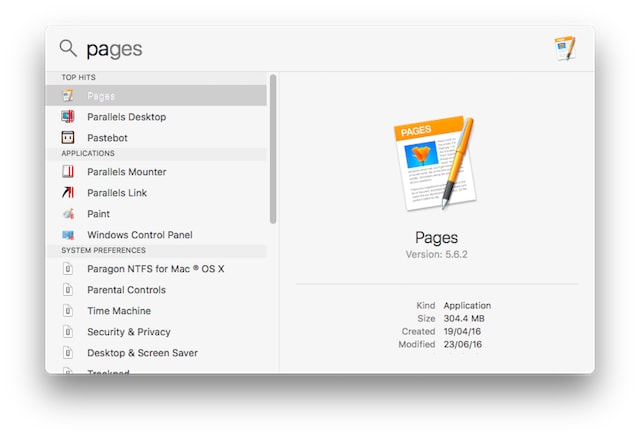
I'm sure yous're wondering why people prefer using the Spotlight, more than than the Launchpad, but as you employ your Mac more, you'll realise that information technology's just easier. Spotlight opens up on top of any app that you might be working on, and then you tin rapidly look upwards things on the internet, or perform quick calculations. It's extremely handy, and yous'll find yourself using information technology more and more than, every mean solar day.
 Closing Apps is non the aforementioned equally Quitting Apps
Another thing to know most the way your Mac handles apps, is that clicking on the red button on the top left doesn't really "quit" the app. It just closes the window you were working on. You lot can try it right now in Pages. If you accept multiple windows of an app open, the clicking on the red button merely closes the window that was open; the other windows remain open.
Accept Skype for example. If you used Skype on Windows, yous will know that clicking on the close button in the Skype app on Windows didn't actually quit Skype. It just closed the Skype window, even though the app nevertheless remained open. This is the instance witheveryapp in macOS.
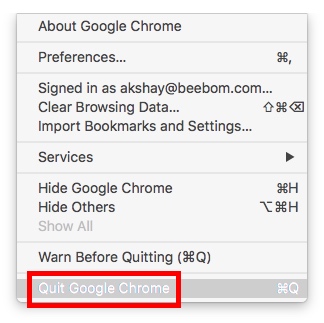
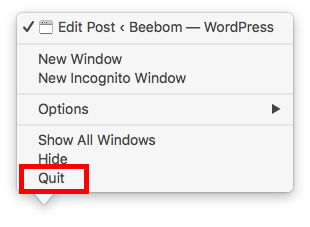
To quit an app, you can utilize the following methods:
- Click on the app's name in the card bar, and click on "Quit".
- Right click on the app's icon on the Dock, and click on "Quit".
- Press "command + Q" to quit the app.
If yous had typed anything in the Pages certificate we but had opened, you'll see a dialog box asking you if you lot want to save the file. I'll leave the conclusion making up to you lot.
Multi-tasking
While I'm still talking about apps, permit me tell yous a niggling scrap about how macOS handles multi-tasking. You lot can have multiple apps open up, manifestly, and yous can switch between them using "control + tab" (similar to "alt + tab" on Windows). However, the trackpad once again provides a gesture for this. First, open up a couple of apps on your Mac, just for the fun of it. Then, perform a 3 finger swipe up gesture on the trackpad, and you lot will see all of the open apps displayed on your screen. This is called the "Mission Command", and information technology can also be accessed by pressing the F3 fundamental. Here, you can either click on the app you want to switch to, or simply hover your cursor over the app, and perform a iii finger swipe down. Think of it like pulling the app towards you.
Swipe upward with three fingers again. Practise you see "Desktop i" on the top of the screen?
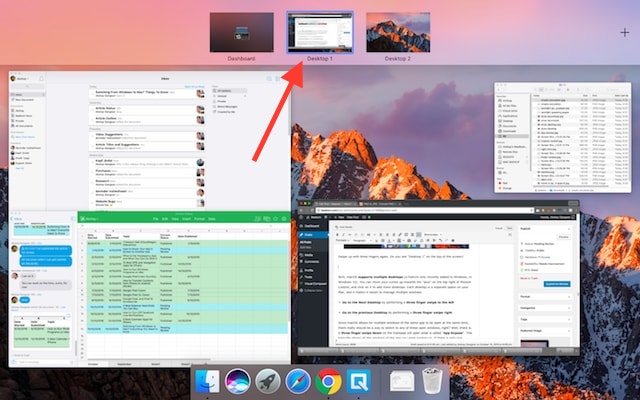
Well, macOS supports multiple desktops (a characteristic only recently added to Windows, in Windows 10). You tin movement your cursor upwardly towards the "plus" on the top right of Mission Command, and click on it to add more than desktops. Each desktop is a carve up infinite on your Mac, and information technology makes information technology easier to manage multiple windows.
- Go to the Side by side Desktopby performing a three finger swipe to the left.
- Go to the previous Desktopby performing athree finger swipe right.
Since macOS allows for multiple windows of the aforementioned app to be open at the aforementioned time, there really should exist a fashion toswitch to any of these open windows, right? Well, in that location is. A three finger swipe downward on the trackpad will open what is called the "App Expose". This basically shows all the windows of the app you were working in. If there is only ane window, information technology'll but testify that. You tin switch to any window easily, using this gesture. You can actually practice this by pressing "command + `" as well.
Installing and Uninstalling Apps
Information technology'south possible that you did not like the apps that iWork offers. I mean, if you lot're a spreadsheet power user, Numbers is quite obviously underpowered. In such cases, you lot might want to install another app that is more to your liking. Installing apps on a Mac is very different from Windows. You don't go an exe file, or an install wizard (in most cases) for a Mac app. Instead, y'all become a "dmg" disk image, that yous just have to double click on, to mount information technology on the system. Then, yous have to simply drag the application'southward icon into your Applications folder, and that's it. The app gets copied onto your Mac, and it but works. No install wizard, no DLL files, no cluttered mess.
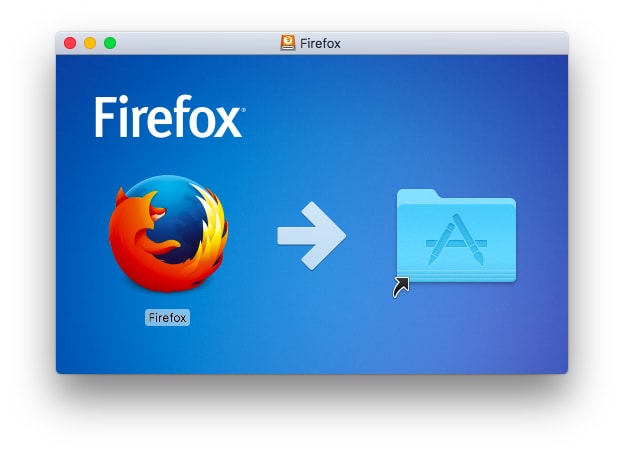
Uninstalling apps on a Mac, is an equally easy task. Y'all don't take to go looking for an uninstaller. All you need to do, is open Finder, and become to your Applications folder. Select the app you desire to uninstall, and simply delete it. You tin can do this by pressing "command + delete", or by right clicking (ii finger tap), and clicking on "Move to Trash". I admit, information technology's non near as satisfying equally seeing an uninstall progress bar make full upward, merely information technology'due south much easier, and that's what matters.
Note :I have not suggested whatsoever third party apps that you "must" install, considering I think you should explore the applications that come with the Mac, earlier using something else. More ofttimes than not, the built-in applications suffice.
Where is the Window Snapping?
Getting dorsum to your piece of work, maybe you lot want to read an article on Safari (by the way, employ Safari as much as you lot can. It's amazing on the Mac. Really.), and write a report based on it. Then you dragged the Safari window to the side of your screen, hoping to get information technology to snap to the side, but it doesn't. Well, unfortunately,macOS nonetheless doesn't support the window-snapping features that Windows does, and it'south disappointing. Still, you lot can use a third party app like Better Affect Tool, or Improve Snap Tool to get this functionality. Better Touch Tool actually offers you the ability to create custom gestures, too.
Siri… a kind of powerful Virtual Assistant
While I'm telling you about things that Windows did better than macOS, permit me talk about personal assistants. You might have used Cortana, on Windows 10. Well, with macOS Sierra, Apple's virtual assistant, "Siri", arrived on the Mac.

With Siri, Apple gets a lot correct, and a bit wrong. For one, there is no way to collaborate with Siri using text. Youhaveto speak to information technology, and accept everyone else glance sideways at "the person talking to their laptop". However, that aside, Siri can be quite helpful. It can look up things on the spider web, create notes for you, exercise calculations, and fifty-fifty control your Mac's settings for you. It has uses, but I think information technology volition accept some fourth dimension before Siri becomes properly integrated with the Mac experience.
So you use NTFS Formatted Drives?
Okay, and so you lot've installed all the apps you wanted to use, and it turns out you need to motion some files into a flash drive? That's absurd, you just connected your wink bulldoze into the USB port, and oh, there information technology is on the Desktop! In a perfect world, that'd be all, just unfortunately, now that yous're trying to copy files into the drive, it turns out there isn't an selection to do that? Or maybe there is. Information technology actually depends upon how your flash drive is formatted. Natively, macOS doesn't support writing to NTFS formatted drives. Note that I said "writing". Yous can still access ("read") files saved on drives formatted using the NTFS filesystem. So what practice you practice now?
Well, you accept two options. You lot can format your wink drive into a format like FAT32, or exFAT. That style it'll work with both macOS and Windows. However, that might not always exist feasible. What if y'all had a 1 TB external hd? Formatting it would lose you all your data! If that is the case, you can go with using a tertiary political party application that adds NTFS back up to macOS, such equally Paragon NTFS for Mac. These are mostly paid apps, but free ones be, as well.
Taking Screenshots
At present, I understand that the interface on a Mac is highly-seasoned, to say the to the lowest degree, and you may want to show information technology off to your friends, and family. The easiest way to do this would probably be sharing screenshots with them. I know you're used to "Windows + Print Screen" (or maybe you utilise the Windows Snipping Tool?) for that, just the Mac shortcuts for screenshots are superb (once you lot get used to them, I mean). Okay, allow'due south have a bunch of screenshots on your Mac, to give you an thought about the kind of flexibility you get while taking screenshots on a Mac.
- To have a total screen screenshot, just press "command + shift + 3".
- To accept screenshots of a role of the screen, press "command + shift + 4". This will plow your cursor into a crosshair. You can press and hold on the trackpad, and drag the crosshair effectually to take a screenshot of a particular region of the screen.
- To accept screenshots of app windows, press "command + shift +4", and and so tap on "infinite".
If you don't like the shadow around the screenshot (and why don't you lot?), you can simply printing and hold "option" while taking the screenshot, and the screenshot volition come out without any shadow surrounding it! I know information technology sounds overwhelming right now, but trust me, you'll become used to these very soon.
Android Phones with Mac
If you accept an iPhone, you're golden. Thank you to the seamless integration betwixt Apple tree products, your devices will work together in ways that will brand your life easy. But, if yous have an Android device, you're going to face some issues. Most glaring of which, is the fact that Android devices don't get detected past macOS in the same manner as they are detected by Windows. That is to say, that they… well, don't. If you do want to utilize your Android device with your Mac, to transfer files and such, you tin download Android File Transfer. It is the official app to transfer files betwixt a Mac and an Android device.
Backup Your Mac, Please
Backups are really important. Go to any calculator community, anywhere on the internet, and you'll non find a single person against backing upwardly your information.
While backups on Windows are done using Windows Backup, which allows users to select the files and folders that they want to back up, along with the destination of the backup, on macOS, they are done using the Fourth dimension Machine. If you're laughing at that name, you lot're not the simply 1. I laughed at the proper noun, likewise. Simply Fourth dimension Auto is named so, because it actually is a Time Machine. Taking backups using Time Machine is easy, and you'll go started in no time. The first backup you takemighthave a very long time, depending on how much data yous have created on your Mac, but the ones afterward that get completed really quickly.
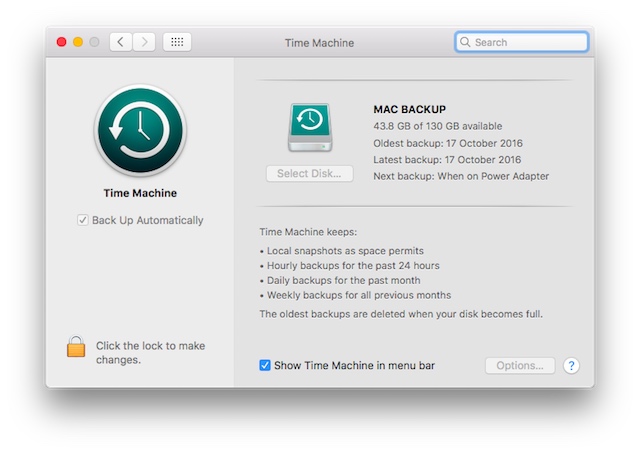
The basic functionality of Time Machine is similar to what Windows has, just Time Car has a much improve interface, and feels more intuitive. The good thing well-nigh Windows Backup is, that yous can create backups on your internal hard disk drive besides. Although (and this is of import), you shouldnevercreate backups on the internal hard disk drive of your figurer.
Time Machine volition help yous, and I'm not kidding. Yous might lose information on your Mac, yous might accidentally delete information technology, or you might just switch to a new Mac after some time. In each of these cases, Fourth dimension Machine will save you a lot of hassle. If you need to restore files using Time Auto, that'due south easy to do, too. So, please, back your Mac up.
Non Responsive Apps
This is not a state of affairs that you will meet on your Mac very often, but every now and then, you might run across an app that has stopped responding. This usually but happens when an app is demanding more resources than the computer can spare, and the only mode to sort information technology out is to force close the app, or, in the worst instance, shutdown your laptop by pressing and holding the ability button.
On a Mac, you tin can merely click on the Apple carte du jour in the carte du jour-bar, and click on "Force Quit". Otherwise, you can also printing command + selection + esc. Either way, you'll run across a Force Quit window, where you tin can select the app that you want to quit.
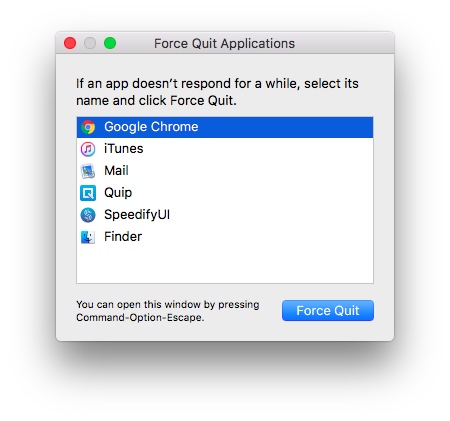
Yous should only improperly shutdown your laptop in situations where yous can't even become to the Force Quit window, and your Mac remains non-responsive for a very long time.
Ports, Accessories and More
One practiced thing about the number of manufacturers making Windows laptops, is that you have such a broad range of products to choose from. This means that you get the flexibility to cull the kind of I/O you desire on your Windows PC. On a Mac, however, you're gonna get what Apple has decided is fit for their laptops, and for actress I/O, you'll have to buy adapters, and such.
Depending on the Mac you lot bought, you'll get a diverseness of ports (or port, if you lot're using a MacBook). So you may demand to get accessories for your Mac. I'chiliad using a MacBook Air, and the of import accessories to have with the Air, are a thunderbolt to Ethernet Adapter (for LAN connectivity), a mini-display to HDMI (if you lot want to use external monitors), and more than, depending on the kind of devices yous desire to connect to your Mac. You can even get an Optical Deejay Drive, if yous need to use CDs and DVDs on your Mac. My bespeak is, that the connectivity options on the MacBook, MacBook Air, and MacBook Pro are kind of limited, out of the box. The MacBook Pro at least has an HDMI out, and so, 1 less thing to purchase.
SEE Besides: 22 Must Accept Apps for Offset Time Mac Users
Moving from Windows to Mac? Become started now
Those were the basics of using a Mac. Information technology may seem a little foreign, switching to the macOS environment, peculiarly if y'all've been a lifelong Windows user. People who have used Linux distros such equally Ubuntu, will discover the macOS surroundings quite relatable (except for the trackpad gestures, generally).
And so, how has your experience been on making the switch from Windows to macOS? Practice you like the features that a Mac offers? And what features do y'all wish it supported? Permit us know most your thoughts and opinions in the comments department below.

Source: https://beebom.com/switching-windows-mac/
Posted by: alvaradoholf1975.blogspot.com
0 Response to "How to Switch from Windows to Mac (Complete Guide)"
Post a Comment